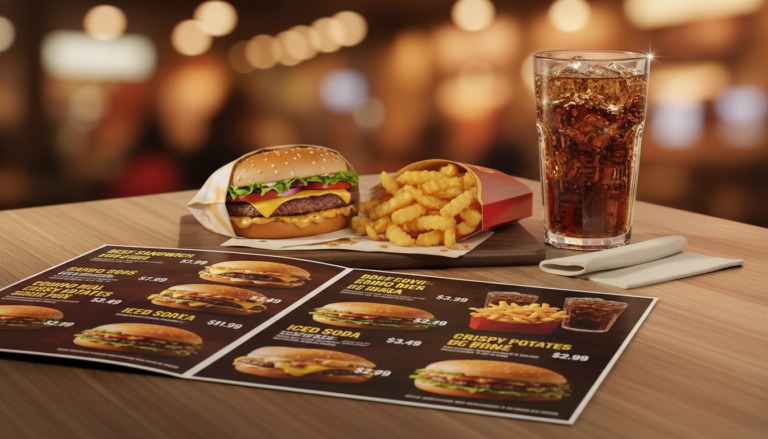
Burger King Allergen Menu | Dietary Guide
Burger King offers clear allergen charts to help customers make smart choices. This guide covers Burger King’s allergen info, talks about cross-contact risks, and gives tips for safe ordering.
The company tracks and labels the 14 U.S. allergens. Symbols like Contains, May Contain, and May Contain via Shared Equipment show what’s in the food and possible cross-contact risks.
Kitchens follow strict controls like separate storage and regular cleaning. But, the fast pace means cross-contact can’t be completely avoided. Toasters, broilers, and shared fryers are often a concern for allergies.
Printed packaging, like dip pot lids and sauce sachets, lists allergens for each item. Fryer oil often includes soy, corn, canola, or cottonseed oils. This is important for those avoiding soy or corn derivatives.
Some U.S. Burger King locations offer dairy-free or vegan options, like an Impossible Whopper without mayo. But, gluten-free buns are not widely available. The company says no peanuts or tree nuts are in standard menu items. But, menus and procedures can change, so always check with staff.
This brief introduction prepares you for detailed tables of breakfast sandwiches, burgers, kids’ meals, combos, and drinks. These tables include prices, calories, and allergen notes in the next sections.
Understanding Burger King’s Allergen Policy and Kitchen Practices
Burger King knows about the 14 allergens U.S. law requires. They mark items to help guests make smart choices. The brand uses clear labels to show when a product Contains an allergen, when it May Contain an allergen from supplier production, and when it May Contain via Shared Equipment due to kitchen processes. Readers should consult the burger king allergen chart for symbol meanings and quick reference.
Overview of the 14 legally specified allergens recognized in the U.S.
These 14 allergens include milk, eggs, fish, shellfish, tree nuts, peanuts, wheat, soy, sesame, mustard, celery, lupin, sulphites, and mollusks. Burger King lists these on ingredient sheets and the burger king allergen list so customers can spot common triggers. Staff training covers recognition of these allergens and how they appear across menu items.
How Burger King defines Contains, May Contain, and May Contain via shared equipment
Contains indicates the ingredient is intentionally included in the recipe. May Contain reflects supplier-level warnings when production lines handle multiple products. May Contain via Shared Equipment signals possible cross-contact during in-store handling, such as from fryers, broilers, or toasters. The burger king allergen chart pairs each label with clear definitions to reduce confusion for guests.
Kitchen controls: separate storage, utensils, cleaning, and limitations of open kitchen environments
Kitchens use separate storage and dedicated utensils when possible. Cleaning protocols target allergen removal on surfaces and tools. Managers train staff to segregate prep for special orders. Even with these controls, open kitchen layouts and shared workstations mean zero risk cannot be guaranteed. For the latest burger king allergen information, contact a store manager or view the in-restaurant chart.
Cross-contact risks from toasters, broilers, fryers, and oil filtration systems
Toasters handle all buns, so gluten, sesame, milk, and egg can transfer between items. Broilers cook beef and sausage on the same surface, creating shared-cooking risk. Fryers may use separate vats, but oil filtration systems that circulate oil between units can carry proteins like soy, corn, and cottonseed oil residues. These cross-contact pathways are noted on the burger king allergen list so customers with severe allergies can weigh risks before ordering.
| Risk Source | Primary Concern | Practical Note | What To Check |
|---|---|---|---|
| Toaster | Gluten, Sesame, Milk, Egg | All buns pass through same toaster | Ask staff to avoid toasting or choose a bowl-based item |
| Broiler | Meat residues, Milk, Egg traces | Shared grilling surface for patties and breakfast sausage | Request fresh-grill timing or avoid cross-contact items |
| Fryer & Oil Filtration | Soy, Corn, Cottonseed, Wheat from battered items | Separate vats exist; shared filtration moves particles | Confirm current fryer use and oil composition with staff |
| Supplier Production Lines | Unexpected traces from multi-product facilities | Items may carry “May Contain” supplier warnings | Review the burger king allergen chart and supplier notes |
burger king allergen menu
Finding the right allergen info is key for those with food allergies. The best sources are official ones. Always check labels, dip pot lids, and counter charts before you order.
Dip pots and single-serve packets list allergens on their lids or wrappers. Items sold in restaurants, like oatmeal tubs, have full ingredient labels. Official charts also show when an item was last updated.
National allergen charts cover main menu items. But, local places might have different items. This can change the allergen chart for a specific location.
Online allergen guides might not be up to date. Some PDFs show old ingredient lists. The latest updates from the company are the most reliable.
If you’re unsure, ask the staff about ingredients and chart dates. Call the restaurant or ask to see packaging for specific items. This helps confirm local changes before eating.
| Source | What To Check | Where It Appears | Why It Matters |
|---|---|---|---|
| Official Allergen Chart | Contains, May Contain, update date, country notes | Posted in-store, corporate downloads, printed sheets | Shows current composition and regional exceptions |
| Product Labels | Ingredient list, allergen declaration, pack date | Dip pot lids, sauce sachets, retail packaging | Item-specific details and legally required allergen statements |
| Franchise/Location Info | Supplier changes, limited-time items, prep differences | Local notices, manager confirmation, in-store menus | Identifies variations not shown on national charts |
| Third-Party Charts | Summaries and archived data | Websites, forums, shared PDFs | Useful for quick checks but may be outdated |
Common Allergens Present in Popular Burger King Menu Items
Many guests check the burger king allergen list before ordering. Milk is often found in cheeseburgers, milkshakes, sundaes, breakfast sandwiches, and some sauces. Labels mark milk as a “Contains” ingredient for items with cheese, cream, or butter-flavored mixes.
Egg is in premade breakfast egg blends, many breakfast sandwiches, and some breaded chicken products. The egg ingredient can be in patties, batter, and select sauces. Customers with egg allergy should review packaging and ask staff.
Soy and wheat or gluten are common across the menu. Soy is in patties, sauces, and frying oil. Wheat is in buns, breaded coatings, and many baked or fried items. The burger king allergen list highlights these as frequent entries, due to cross-contact risk.
Less-common allergens like sesame, mustard, celery, lupin, and sulphur dioxide appear on some labels. Sesame is often in select buns and seed blends. Mustard and celery are in particular sauces and seasoning mixes. Customers need to check labels carefully.
Staff training and in-store packaging are the quickest ways to confirm ingredients. The national burger king allergen list provides a baseline. But franchised locations may have slight recipe or supplier differences that affect allergens reported on local packaging.
Use the following quick-reference table to compare how common allergens map to menu groups. Review the full in-store chart and ask staff when cross-contact is a concern.
| Menu Group | Common Allergens | Typical Sources | What To Check |
|---|---|---|---|
| Burgers & Sandwiches | Milk, Wheat, Soy, Sesame | Cheese, buns, sauces, sesame-topped rolls | Ingredient label, bun choice, sauce held |
| Breakfast Items | Egg, Milk, Wheat, Soy | Egg patties, buttery mixes, biscuit/rolls | Ask about premade egg blend and butter flavoring |
| Chicken & Breaded Products | Egg, Milk, Wheat, Soy | Breadings, batter, some marinades | Confirm breading ingredients and fryer use |
| Fried Sides | Wheat, Soy | Breading, frying oil exposure | Check fryer sharing and oil type |
| Desserts & Shakes | Milk, Soy | Ice cream, chocolate, sauces | Label review for dairy and soy lecithin |
| Sauces & Condiments | Egg, Milk, Mustard, Celery | Mayonnaise, creamy dressings, specialty sauces | Read sachet lids and in-store allergen charts |
For those managing burger king allergies, keep a short list of safe swaps. Ask to hold cheese or mayo, pick an unseeded bun or lettuce wrap, and request separate utensils. Confirm details with printed packaging to address specific burger king food sensitivities before eating.
Safe Ordering Tips for Customers with Food Allergies
Customers with food allergies need clear steps when ordering at fast food restaurants. Burger King provides printed ingredient lists on dip lids, sauce sachets, and retail packaging. Review those labels and ask staff to confirm details before you order.
Always check printed packaging and ask staff to verify ingredients
Start by inspecting packaging and dip pot lids for allergen statements. Use the in-store charts for the latest burger king allergen information. Tell the crew you have a food sensitivity and request they read ingredients aloud if needed.
How to request modification: hold mayo, hold cheese, choose specific buns or no bun
Simple swaps reduce exposure to milk and egg. Ask to hold mayo or cheese, order an Impossible Whopper without mayo, or choose no bun. Remember U.S. locations do not typically offer gluten-free buns. Confirm staff can make the modification and whether they can prepare the item on a clean surface.
Best practices when cross-contact is a concern: speak with the manager and request separate prep
If you face higher risk from burger king food sensitivities, speak directly with the manager. Request separate utensils, freshly opened packaging, and a separate prep area. Ask whether the toaster, fryer, or broiler will be avoided during preparation.
Franchise practices vary across locations. Ask whether staff follow local policies for burger king dietary restrictions and what steps they take to limit cross-contact. If uncertainty remains, inspect packaged items and confirm current allergen charts before consuming.
| Action | Why It Helps | When To Use | What To Ask |
|---|---|---|---|
| Check Dip/Sachet Labels | Provides immediate allergen details | At pickup or drive-thru | “Does this list milk, egg, soy, or gluten?” |
| Request Hold Modifications | Removes common dairy and egg sources | Ordering burgers or breakfast sandwiches | “Please hold mayo and cheese, no bun if possible” |
| Ask For Separate Prep | Reduces cross-contact risk | Severe allergies or past reactions | “Can a manager arrange separate utensils and prep space?” |
| Confirm Allergen Chart | Ensures data matches menu changes | First visit or seasonal menu changes | “May I see your current allergen information?” |
Keep records of what works at your local restaurant. Share successful requests with staff for future visits. Doing so helps manage burger king food sensitivities while using verified burger king allergen information to guide safe choices under burger king dietary restrictions.
Allergen Information for Burgers and Beef-Based Items
Beef burgers at Burger King often have allergens from toppings, sauces, and buns. Items like the WHOPPER®, Bacon Cheeseburger, and Double Cheeseburger have milk, soy, and wheat/gluten. Some buns may have sesame.
Cheese and creamy sauces add milk and sometimes egg to the mix.
Which burgers commonly contain milk, egg, soy, wheat, and sesame
Most beef sandwiches have wheat in the bun and soy in the patty seasoning. Cheese adds milk and may include egg in some sauces. Toppings like sesame seeds pose a risk.
Staff should check the current burger king allergen list for each item before ordering.
Notes on toasted buns and the risks for gluten, sesame, milk, and egg
All buns are toasted on a shared toaster. This can lead to cross-contact with gluten and sesame. Brioche or egg-enriched buns may have milk and egg.
Customers with severe allergies should avoid bun-containing sandwiches. They should ask for items without buns and check handling practices on site.
Plant-based/Impossible Whopper allergen considerations and mayo/aioli modifications
The Impossible Whopper has a plant-based patty with soy, prepared on shared equipment. Ordering it without mayo can make it dairy-free. Mayo or aioli sauces may contain egg.
Confirm modifications with staff and check the burger king allergen menu before eating.
| Item | Description | Common Allergens | Ordering Notes |
|---|---|---|---|
| WHOPPER® | Flame-grilled beef, sesame bun, standard toppings | Wheat, Soy, Milk (if cheese), Sesame | Ask to hold bun or cheese; check current burger king allergen list |
| Bacon KING | Two beef patties, bacon, cheese, deluxe bun | Wheat, Soy, Milk, Egg (in some sauces) | Request no cheese or sauce to reduce milk/egg exposure |
| Cheeseburger / Double | Beef patty with processed cheese and pickles | Wheat, Soy, Milk | Order without cheese; confirm veg oil and prep methods |
| Impossible Whopper | Plant-based patty, same prep as beef options | Soy, Wheat (bun), Shared equipment cross-contact | Order without mayo for dairy-free; verify grill/toaster use |
For the most reliable choices, consult in-restaurant packaging and the official burger king allergen menu. Use the burger king allergy-friendly menu guidance after staff confirm current prep and ingredient details. Guests with severe allergies should speak with a manager and review the full burger king allergen list before eating.
Allergen Information for Chicken, Fish, and Breaded Products
Chicken, fish, and breaded items at Burger King have both clear ingredients and hidden risks. Customers with food sensitivities should check labels and talk to staff before ordering. The best place to start is the burger king allergen chart for the latest information.
Chicken items like Crispy Chicken and Chicken Nuggets have different allergen profiles. Some may include milk or egg in the breading. Nuggets and fries usually have fewer dairy ingredients, but labels can vary by product and region.
Fish items, such as KING Fish, contain fish proteins and often have wheat/gluten in the coating. Anyone with food sensitivities should consider fish items as containing both fish and gluten unless the chart says differently.
Shared fryer use is a big risk for cross-contact. Fryer vats might be set for specific items, but common oil systems can transfer allergens. Fryer oils can include corn, canola, soy, and cottonseed, which can carry soy or corn residues into items without those ingredients.
Seasonal sandwiches and limited-time items can change quickly. An item in the U.S. might be different from those in Canada or the U.K. Always check the latest burger king allergen chart for updates before ordering.
| Item | Common Allergens | Cross-Contact Notes | Action |
|---|---|---|---|
| Crispy Chicken Sandwich | Wheat, Soy, Possible Milk/Egg | Often toasted on same equipment; fryer cross-contact possible | Request no toasting; confirm fryer protocol |
| Chicken Nuggets | Wheat, Soy; some formulations list No Milk | May share fryer with other items; oil filtration can transfer residues | Check local packaging and ask staff for fryer separation |
| Chicken Strips / Filets | Wheat, Soy, Often Milk or Egg in Breading | Handled on same prep surfaces as other chicken products | Confirm ingredient list on site and request separate prep if needed |
| KING Fish | Fish, Wheat/Gluten, Soy | Broiler and fryer stations may be shared with other items | Verify fish item label and avoid if severe fish or gluten allergy |
| Seasonal Crispy Sandwiches | Varies: may include Milk, Egg, Soy, Wheat | Formulations change by region and promotion | Always check current burger king allergen chart and in-store packaging |
For serious allergies, managers can confirm if a product’s batter or coating contains milk or egg. Use the burger king allergen information and packaging as double checks. If cross-contact risk is too high, choose items with clearly stated allergen-free labels.
Reading the burger king allergen chart before ordering helps avoid surprises. Remember, ingredient updates can happen between nationwide releases. Always ask at the counter for the latest details on fryer use and seasonal product composition.
Allergen Information for Sides, Snacks, and Sweet Treats
Sides and snacks at Burger King are great for a quick meal. Guests should check the burger king allergen menu and ask staff if unsure. Packaging and in-store charts provide the latest information on each item.
French fries, hash browns, and onion rings are fried in shared fryers. This means there’s a risk of cross-contact with milk, wheat, soy, and other allergens. If you have severe burger king allergies, ask for ingredient sheets and talk to the manager before ordering fried sides.
Most desserts and shakes have dairy. Milkshakes, sundaes, soft-serve, and many pies list milk on their labels. Burger King does not offer dairy-free desserts in U.S. restaurants. Cinnamon Apple Pie and similar sweets have milk in their ingredients.
Oatmeal made with water can be dairy-free, but how it’s mixed varies by location. Always check the burger king allergen menu and ask how oatmeal is prepared at your restaurant.
Packaged sides like apple slices have allergen labels. These labels follow supplier declarations and help customers compare the burger king allergen list against in-store charts. Packaged items have lower cross-contact risk but always check for added ingredients or processing warnings.
| Item | Description | Common Allergens | Notes |
|---|---|---|---|
| French Fries | Crispy potato fries | May contain wheat, milk, soy (cross-contact possible) | Fried in shared oil; confirm current fryer practices |
| Hash Browns | Breakfast potato patty | May contain milk, wheat (cross-contact) | Prepared in breakfast line; check local preparation |
| Onion Rings | Battered and fried onion slices | Milk previously reported; verify current chart for updates | Fryer and batter may vary by region; confirm in-store |
| Apple Slices (Packaged) | Prepacked apple portions | Check packaging for allergen statements | Lowest cross-contact risk; read printed label |
| Oatmeal (Prepared) | Hot oats, prepared per location | May be dairy-free if made with water; check for milk | Ask staff how oats are prepared before ordering |
| Cinnamon Apple Pie | Warm baked pastry with apple filling | Contains milk | Not dairy-free; review burger king allergen menu for alternatives |
| Milkshake | Blended milk and flavoring | Contains milk | All milkshakes contain dairy in U.S. locations |
Use the burger king allergen list to compare items before ordering. Ask staff if fryer oil filtration or shared equipment has changed. Clear, proactive questions help avoid unexpected exposure for those managing burger king allergies.
Allergen Information for Sauces, Dips, and Condiments
Sauces and condiments can have hidden allergens. Guests should check the packaging to match their needs with burger king allergen information. This saves time and reduces risk for those with dietary restrictions.

Which dipping sauces contain milk or egg
Ranch and Buffalo Dipping Sauce in the U.S. list milk on their labels. Many mayo-based dressings have egg. KING Sauce and mayonnaise may include egg and milk. Always read labels and ask staff if unsure.
Sauces that are dairy-free but may contain egg or soy
Honey Mustard, Zesty, and seasonal Stacker sauces are dairy-free. Yet, they might have egg or soy. BBQ-style sauces and ketchup are often dairy-free but can vary by location. Always check the burger king allergen chart and sachet text.
Where to find allergen info on sachets and dip pot lids
Branded sachets and dip pot lids have primary allergen declarations. They list milk, egg, soy, and other allergens. If a label is missing, ask for a new one or check the burger king allergen chart with staff.
| Sauce | Common Allergens | Typical Declaration Location | Quick Tip |
|---|---|---|---|
| Ranch | Milk, Egg | Sachet / Dip Pot Lid | Do not assume dairy-free; inspect label |
| Buffalo Dipping Sauce (U.S.) | Milk | Sachet / Dip Pot Lid | Confirm U.S. vs Canada formulas |
| Honey Mustard | Egg, Soy | Sachet / Dip Pot Lid | May be dairy-free; check for egg |
| Zesty | Egg, Soy | Sachet / Dip Pot Lid | Check if mayo base is used |
| Ketchup / BBQ | Usually dairy-free; may contain soy | Sachet / Dip Pot Lid | Review label for location-specific recipes |
| KING Sauce / Mayonnaise | Egg, May Include Milk | Sachet / Dip Pot Lid | Assume egg unless label states other |
Staff can access the latest burger king allergen information. For severe allergies, ask to see the burger king allergen chart. Always inspect unopened packaging. Small steps at the counter make dining safer for everyone.
Dietary-Friendly Options: Dairy-Free and Vegan Choices
Looking at the burger king allergy-friendly menu, you’ll find many dairy-free and vegan options. These choices are available at many U.S. locations. But, it’s important to check current labels and ask staff about local preparations.
Some confirmed options include the Impossible Whopper without mayo, French fries, onion rings, hash browns, and oatmeal made with water. Ketchup and BBQ sauces are usually dairy-free. But, always check the dip pot lids and sachets for allergen notes.
To reduce dairy and egg, ask for no mayo, no cheese, or an alternative bun. For breakfast, find out if egg patties or milk are used. Confirming with staff is key to following burger king dietary restrictions.
The Vegan Society has certified some items in certain areas. Vegan-certified products don’t have animal ingredients. Yet, they might have “may contain” warnings for shared equipment. Guests following strict vegan rules should consider the risk of cross-contact before ordering.
Here’s a quick guide to help you choose and customize your order.
| Items | Description | Calories | Prices |
|---|---|---|---|
| Impossible Whopper (No Mayo) | Plant-based patty with lettuce, tomato, pickles, onion; request no mayo to keep dairy-free | Approx. 630 | $6.99 |
| French Fries | Classic fries; prepared in shared fryer—ask about cross-contact | Approx. 380 (medium) | $2.49 |
| Onion Rings | Crispy rings; may be dairy-free but fried in shared oil—confirm locally | Approx. 410 (medium) | $2.99 |
| Hash Browns | Breakfast potato patty; typically dairy-free, check cooking surface | Approx. 150 | $1.99 |
| Oatmeal (Prepared With Water) | Plain oatmeal option when made with water; confirm if creamers or milk added | Approx. 160 | $1.79 |
| BBQ Sauce / Ketchup | Commonly dairy-free; check sachets and dip pots for allergen notes | Approx. 45 (per serving) | $0.00–$0.49 |
If you have severe dietary restrictions, talk to a manager before ordering. Ask for separate utensils or a clean prep area to reduce cross-contact risk. Always check on-site packaging against the burger king allergen menu for confirmation.
When vegan certification is present, read any “may contain” statements. The certification means ingredients are free from animal products. But, it doesn’t eliminate the chance of cross-contact in kitchens where shared frying, toasting, or broiling occurs.
Special Considerations for Severe Allergies and Cross-Contact Risk
People with life-threatening allergies need clear steps before ordering. Burger King allergen information should be checked at the counter and on packaging. Staff can confirm on-site practices, but kitchen layout and shared equipment create real risks for cross-contact.
When to avoid toasted buns, shared fryers, and broilers
All buns are toasted in common toasters. People allergic to gluten, sesame, milk, or egg should avoid sandwich products with a bun. Broilers and shared fryers handle multiple items. Cross-contact can transfer proteins from one food to another, raising the risk for sensitive diners.
Understanding supplier “may contain” warnings and shared production-line risks
Suppliers often list “may contain” statements when lines process multiple ingredients. These warnings appear on the burger king allergen chart and on retail packaging. Fryer oil blends—common formulas include corn, canola, soy, and cottonseed—can carry traces between batches when filtration systems are shared.
Steps to take before eating: speak to manager, review the chart, inspect packaging
Ask to speak with the manager or shift lead about specific procedures at that location. Request a current copy of the burger king allergen chart and review dip-pot lids or wrapped items for printed declarations. When possible, ask staff to prepare food in a separate area and use clean utensils.
For severe reactions, consider avoiding high-risk items entirely. Clear communication improves safety for those with burger king food sensitivities. Written confirmation on the allergen chart gives you a record of what was checked at the time of service.
| High-Risk Item | Primary Cross-Contact Source | Typical Allergen Concerns | Recommended Action |
|---|---|---|---|
| Sandwiches with Bun | Common toaster, toasted buns | Gluten, Sesame, Milk, Egg | Avoid buns; choose lettuce wrap or no-bun option where available |
| Fried Items (Fries, Nuggets) | Shared fryer oil and filtration | Soy, Corn, Wheat (breading), Cross-contact from other proteins | Ask if a dedicated fryer is used; avoid if uncertain |
| Broiler-Cooked Patties | Shared broiler grates and drippings | Milk, Egg, Soy, Gluten traces from buns or toppings | Request a fresh grill area or choose an alternative item |
| Sauces and Dip Pots | Shared ladles, dip-pot lids, condiment stations | Milk, Egg, Soy, Mustard | Inspect sachets or sealed packaging; confirm ingredients with staff |
| Packaged Sides (Apple Slices, Oatmeal) | Supplier labeling and in-store handling | Possible cross-contact declared on labels | Check packaging for “may contain” notes and ingredient lists |
How to Use Burger King’s Allergen Chart Effectively
The burger king allergen chart helps customers make safer choices. It lists symbols for items that contain allergens, may contain due to cross-contact, or may contain via shared equipment. Use the chart with in-store labels and staff answers for the best results.
Interpret symbols carefully. A “Contains” mark means the ingredient is in the recipe. A “May Contain” note warns of possible traces. A “May Contain via Shared Equipment” warning signals cross-contact risk.
Check ingredient sources. Some entries break down gluten and tree-nut sources with numeric codes. When the chart shows “gluten” or “tree nuts,” review the detailed notes. This helps you understand which specific grains or nuts are involved.
Use multiple confirmations. Treat the corporate burger king allergen information as the baseline. Verify with item labels and ask staff to confirm the chart version and date. This ensures you have the most up-to-date information.
Practical ordering steps. If you need a burger king allergy-friendly menu choice, request that staff note modifications. Ask them to prepare items separately when possible. For severe allergies, speak with the manager about fryer use, toaster policies, and broiler handling before you order.
| Chart Symbol | Meaning | Action To Take | Example |
|---|---|---|---|
| Contains | Ingredient is part of the product recipe | Avoid item if allergic; choose alternative | Cheese marked as Contains Milk |
| May Contain | Supplier reports possible cross-contact in production | Ask staff for recent supplier updates; consider avoidance | Sauces with supplier “may contain” egg |
| May Contain via Shared Equipment | Kitchen tools or fryers create cross-contact risk | Request separate prep or select a different item | Fries in a shared fryer with battered items |
| Numbered Source Codes | Specifies which grain or nut is present (e.g., 1=wheat) | Cross-check numbers with chart notes for specifics | Gluten: 1=wheat, 2=barley |
When the chart changes. Online charts can be outdated. Confirm the burger king allergen information date on the chart and compare it with packaging at the restaurant. If in doubt, ask the manager or contact corporate for the most current details.
Final tip for cautious diners. Use the chart plus visible packaging and staff confirmation to build a personal plan. This approach improves confidence when selecting items from a burger king allergy-friendly menu. It reduces surprises from hidden ingredients or cross-contact.
Conclusion
Burger King makes sure to provide accurate allergen information. They use printed labels and official charts to help customers. Kitchens follow strict rules to avoid cross-contact, but it’s not always possible.
Customers with severe allergies should always check in-store. They should ask for their food to be prepared separately if needed.
Recently, U.S. guidelines updated information on dairy-free and vegan options. They also mentioned fryer oil contents and regional differences. No peanuts or tree nuts were found in recent menu items.
Gluten-free buns are not available everywhere. Always check the current dietary restrictions at Burger King. Menu items and ingredients can change.
Customers should use all resources available to them. This includes official charts, labels, packaging, and talking to staff. This helps make informed choices.
Stay away from items that are more likely to cause cross-contact. This includes toasted buns, shared fryers, and broiler-cooked patties. Popular items and special offers can change often.
Always double-check the allergen information and dietary restrictions before ordering. This ensures a safe and enjoyable dining experience.
FAQ
What allergens does Burger King recognize and report?
Burger King knows about the 14 food allergens that are legally required. They list these on their charts and packaging. This includes common allergens like milk, egg, soy, and wheat/gluten.
They also mention fish and others. Some charts include sesame, mustard, celery, lupin, and sulphur dioxide. Gluten and tree nuts are noted with special codes.
What do the symbols Contains, May Contain, and May Contain via Shared Equipment mean?
Contains means the ingredient is in the product on purpose. May Contain warns of possible cross-contact from suppliers. May Contain via Shared Equipment shows risk from in-store preparation.
These symbols help show how safe a product is.
Where can customers find the most reliable allergen information?
The best places are the official allergen charts, labels on packaging, and allergen declarations on items. Always ask staff or a manager for the latest information.
Remember, ingredient lists and procedures can change.
Are online allergen charts always up to date?
No, many online charts are outdated. Always check the chart’s date and version. For U.S. updates, use corporate guidance when available.
How significant are cross-contact risks in Burger King kitchens?
Cross-contact risks are real. Kitchens share toasters, broilers, and fryers. Even with controls, fast-paced environments and shared oil systems mean no item is completely safe.
Which menu items commonly contain milk and egg?
Milk is in cheeseburgers, many beef sandwiches, breakfast items, sauces, desserts, and shakes. Egg is in premade breakfast egg mixes and some breaded items. Some chicken and fish patties may also have milk or egg.
Is it safe to order the Impossible Whopper if I want a dairy-free or vegan option?
The Impossible Whopper can be dairy-free without mayo. But, it has soy. It’s made with shared equipment, so cross-contact with animal products is possible. Ask staff about preparation to decide.
Are fries, onion rings, and hash browns dairy-free or safe for those avoiding soy?
French fries, onion rings, and hash browns are fried in shared vats. Fryer oil may contain soy and other oils. These items carry cross-contact risk and may not be safe for severe soy allergies.
Does Burger King use peanuts or tree nuts in U.S. menu items?
At last check, Burger King confirmed no peanuts or tree nuts in U.S. items. But, supplier or regional changes can happen. Always check the chart and packaging, and confirm with staff.
Which sauces and dips contain milk or egg?
Some sauces have milk or egg. Ranch and certain Buffalo sauces have milk. Many mayonnaise-based sauces have egg. Sauce sachets and dip-pot lids are quick sources of allergen info. Basic ketchup-style sauces are usually dairy-free but check for soy or egg.
Can locations customize orders to reduce allergen exposure?
Many locations can modify orders to reduce dairy or egg. They can hold mayo, remove cheese, or omit toppings. They can also make items without buns, though no gluten-free buns are available in U.S. locations. Franchise practices vary, so always confirm preparation and utensil use.
What should customers with severe allergies do before eating?
Talk to the manager, review the allergen chart, and check packaging. Ask for separate preparation and utensils if possible. For high-risk items, consider avoiding them.
How should customers use Burger King’s allergen chart effectively?
Understand the symbols for Contains, May Contain, and May Contain via Shared Equipment. Check for specific gluten or tree-nut entries. Use the chart with packaging and staff confirmation to make an informed choice. Always verify the chart’s date/version.